

PDF guide · Planning & Scheduling
Write work instructions your team will actually use
A practical guide to creating clear, sufficiently detailed work instructions that reduce variability, improve safety and lift the quality of every job.
Creating work instructions that work
Who and when
Who this is for and when to use it
This guide is for maintenance planners, supervisors and engineers who write or own work instructions and job plans. It helps when the same task gets done three different ways by three different technicians, when your instructions exist but nobody uses them because they're too vague, too bloated, or written for the binder instead of the job, or when you're improving PM quality and know that poorly executed tasks are undoing well-designed ones.
The case
Why it matters
Work instructions guide technicians through inspecting, repairing and maintaining equipment. Without good ones, tasks take longer, quality varies from person to person, and the risk of errors and incidents goes up, and even a well-designed PM program underdelivers if the tasks aren’t executed consistently.
The fix isn’t more paperwork. It’s a standard structure and a handful of best practices that make instructions fast to write and genuinely useful at the job, which is exactly what this guide gives you.
What's inside
What you get
- A standard structure to follow for your organisation's work instructions
- A summary of reminders and best practices for instructions that improve quality, safety and consistency
- A printable reference table to keep on your desk
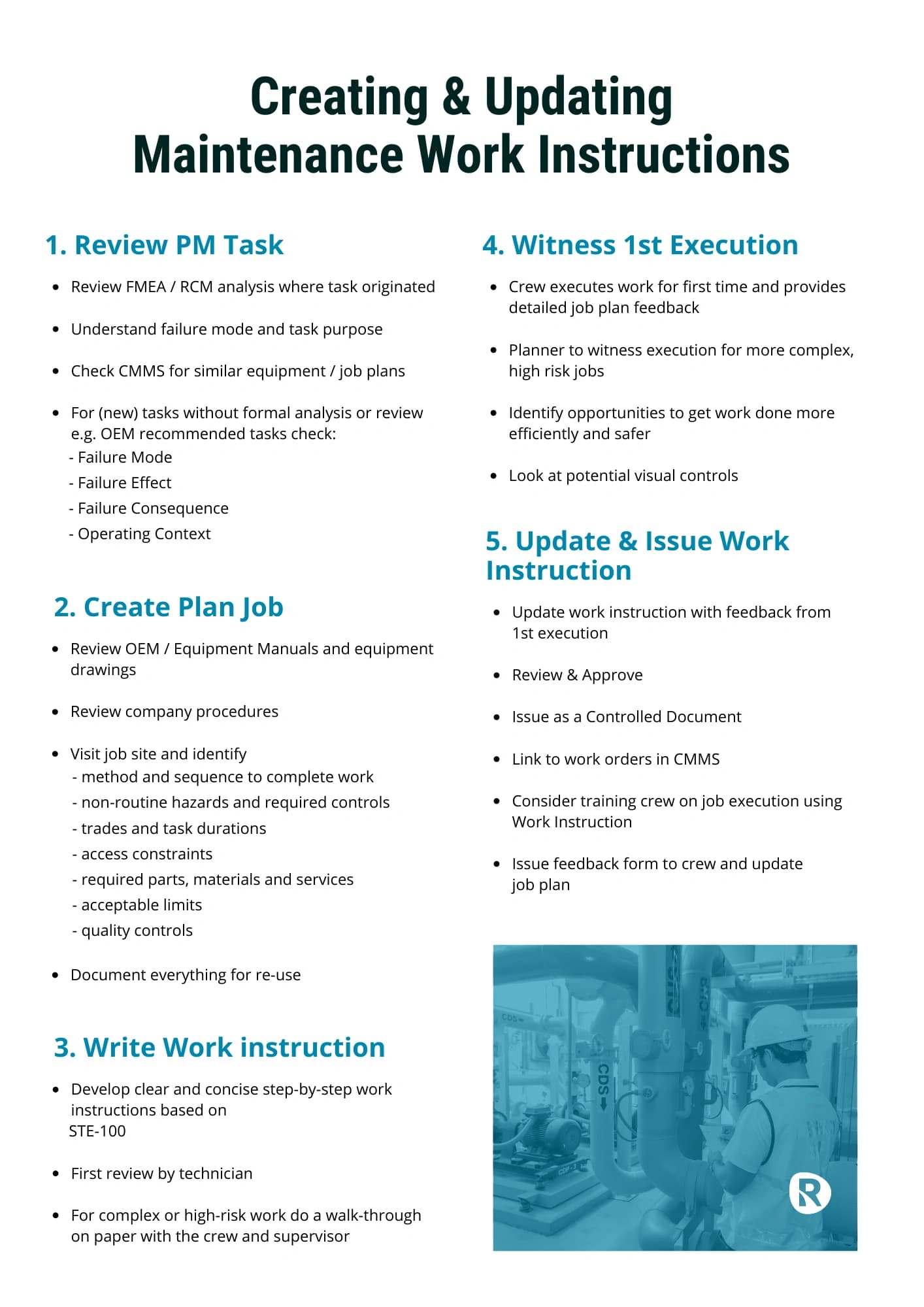
Step by step
How to use it
- Read the guide. It's a short PDF, built for use rather than shelf life.
- Print the reference table and keep it at hand when writing or reviewing instructions.
- Pick one frequently executed task and rewrite its instruction using the structure.
- Roll the structure out as your site standard, one instruction at a time, starting with the highest-risk and most repeated tasks.
Download
Get the guide
Enter your details and we’ll email you the PDF.
Go deeper
Well-written instructions are one part of quality job plans. PS200 (for planners, schedulers and supervisors) covers the full planning craft.
Keep exploring
Related resources
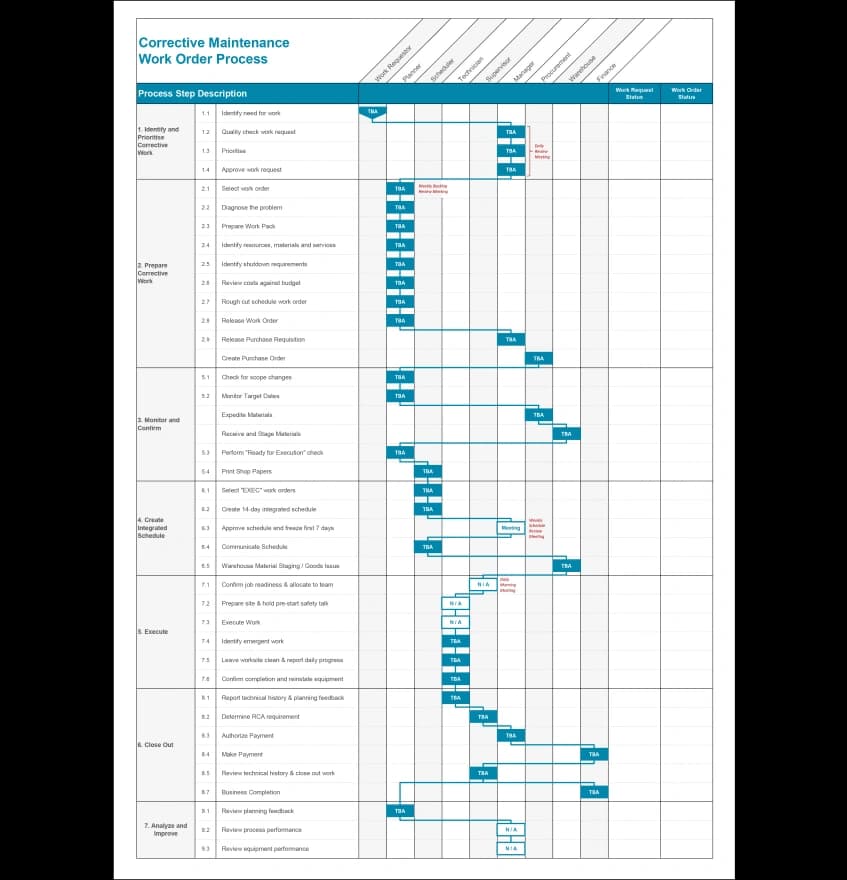
Corrective maintenance process flow
A clear, proven process flow for corrective maintenance (from identification to close-out) to standardise how work moves through your site.
Excel template, emailed to you
Get the process flow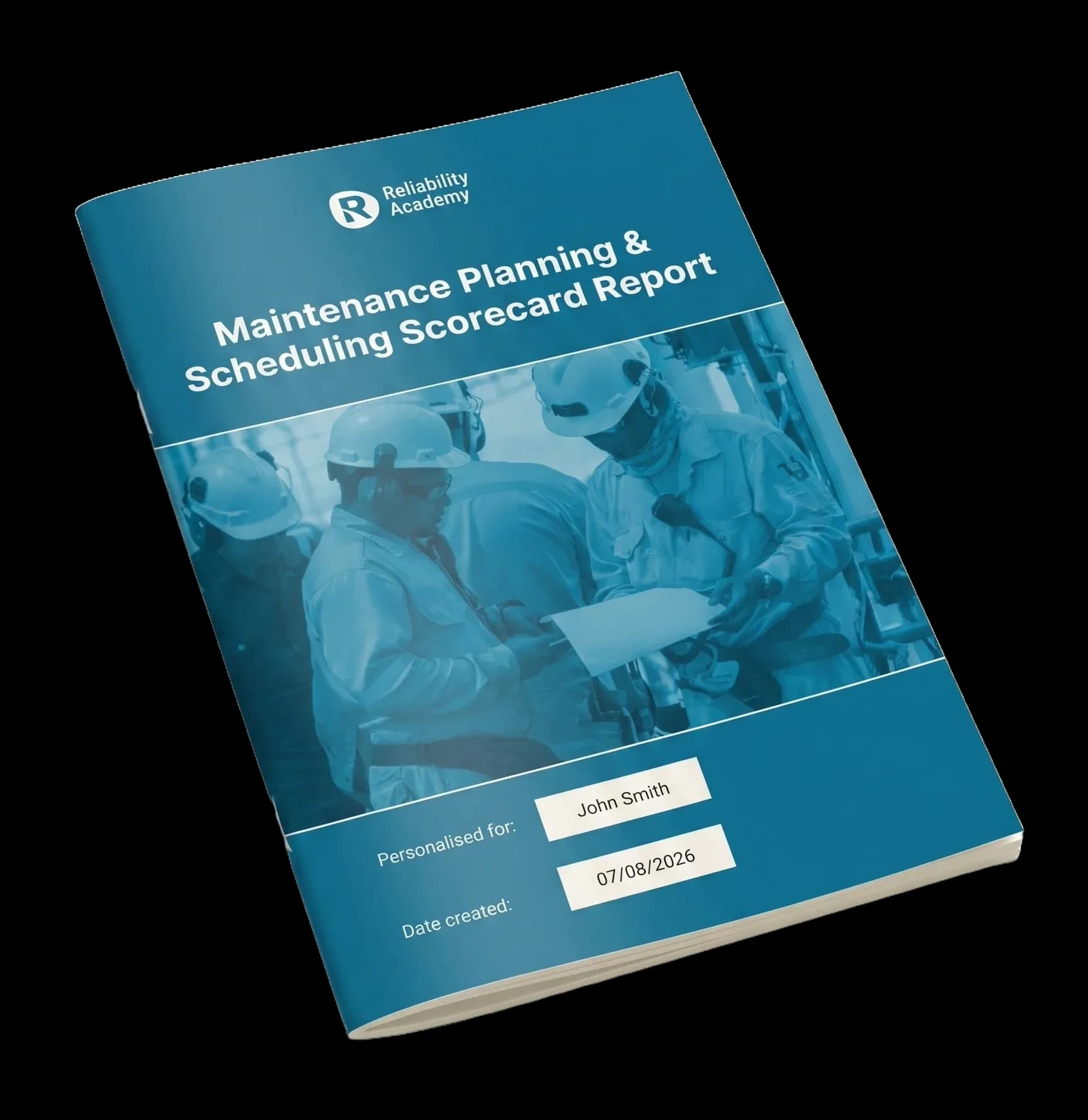
Planning & Scheduling Scorecard
Score your planning and scheduling performance and get a personalised 20+ page report on where and how to improve.
20–30 minutes · instant results
Take the scorecard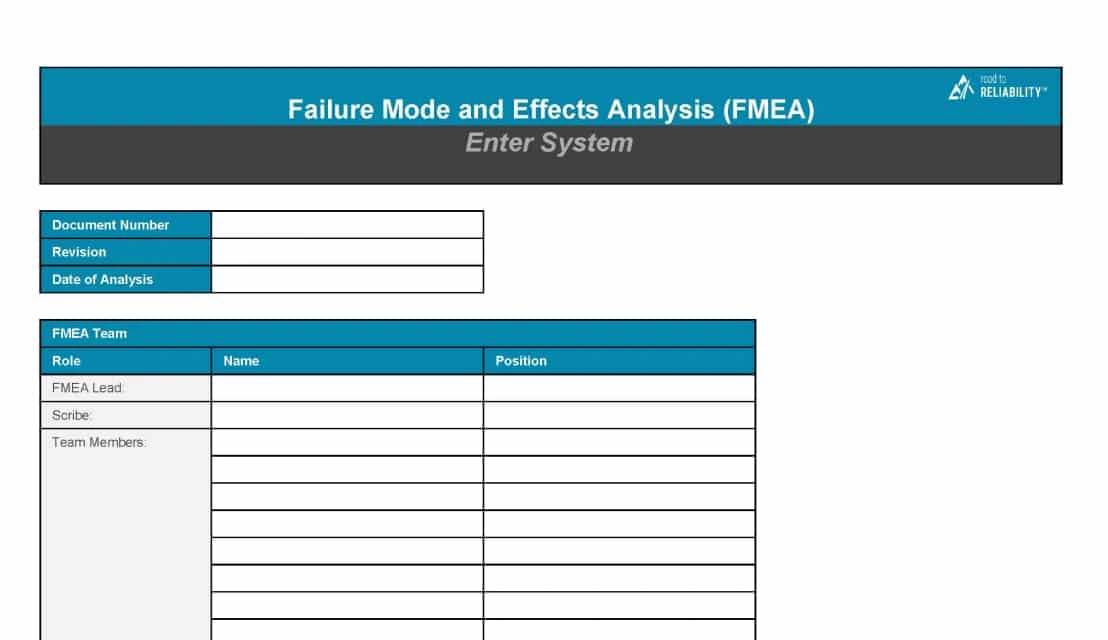
FMEA template
A ready-to-use FMEA template to identify failure modes and build a PM program based on what actually fails, not what the OEM manual says.
Excel template, emailed to you
Get the templateFAQs
Frequently asked questions
What format is the guide?
A PDF, including a printable best-practice table for your desk.
Is it really free?
Yes. We email you the file.
How detailed should work instructions be?
Detailed enough that a competent technician unfamiliar with the specific task can execute it correctly and safely. The guide's structure helps you hit that level without writing a novel.
Does this apply outside maintenance?
The structure and best practices work for any procedural task, but the examples and focus are maintenance.