Reliability Academy

Online defect elimination training — coming soon

DE100: Defect Elimination & Root Cause Analysis

Fix problems forever instead of forever fixing them. Build the practical skills your team needs to identify, prioritise, and eliminate the chronic defects that drive most of your maintenance workload.

What you will learn

What DE100 will cover

The DE100 Defect Elimination & Root Cause Analysis course is in development. It brings two approaches together into a single improvement process: the proactive elimination of the minor defects frontline teams deal with every day, and formal root cause analysis for the significant failures that need deeper investigation.

You will learn to define defects, analyse their causes — including the human and organisational factors behind them — implement solutions that last, and track the benefits. Along the way we cover a full range of RCA techniques, from simple 5-Why analysis through to advanced methods like Apollo RCA, and how to implement an effective DE process across your organisation.

The course outline is still being finalised and may change before launch. Here’s what DE100 will cover:


Defect elimination versus root cause analysis

Defect Elimination vs Root Cause Analysis

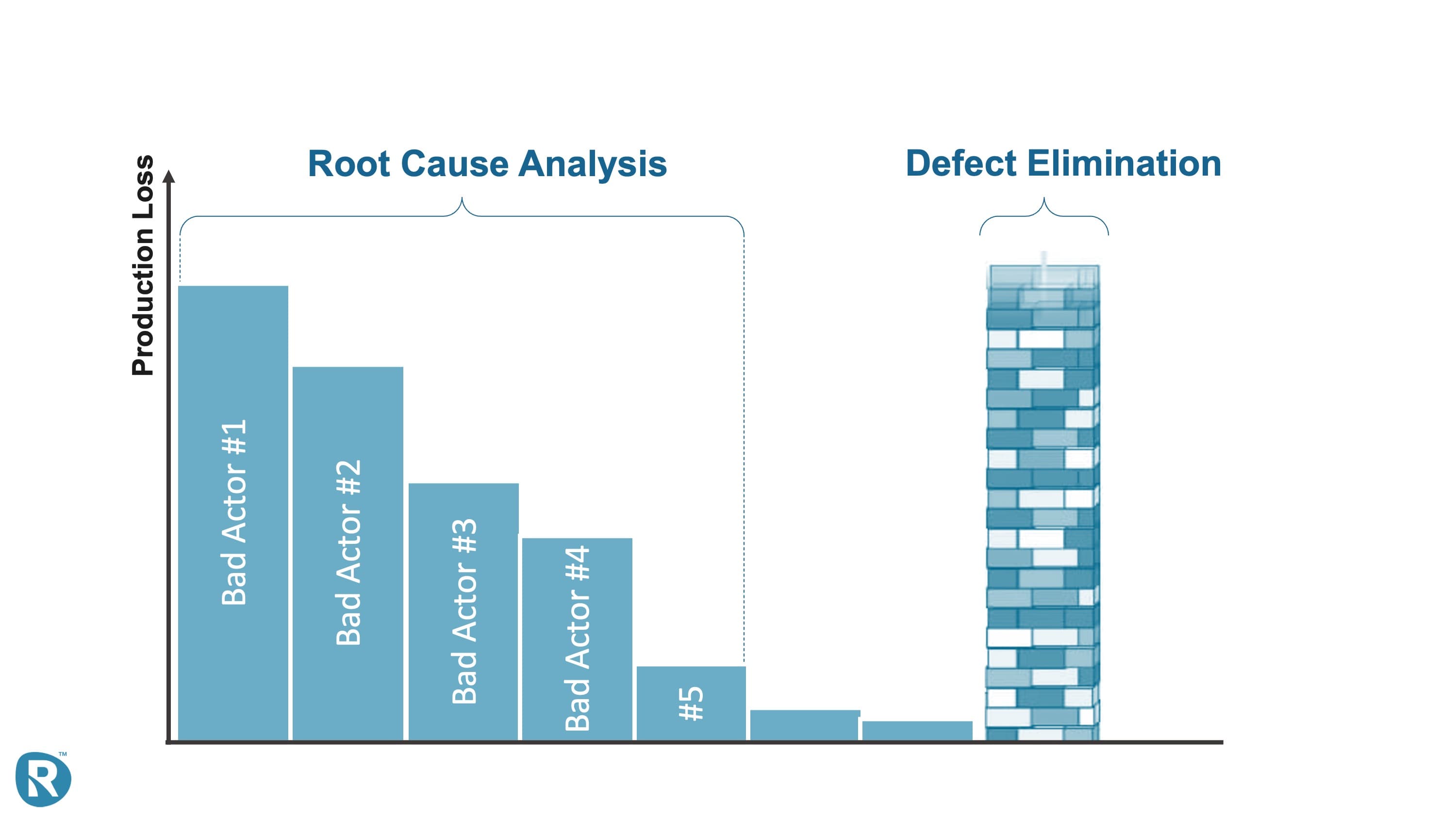
What defect elimination actually is, how it differs from root cause analysis, and why the two work best together — RCA to tackle your bad actors first, defect elimination to progressively remove the minor defects most plants learn to live with. Includes the 7 Rules of an effective DE process.

Human error and the conditions behind it

Human Error and the Conditions Behind It

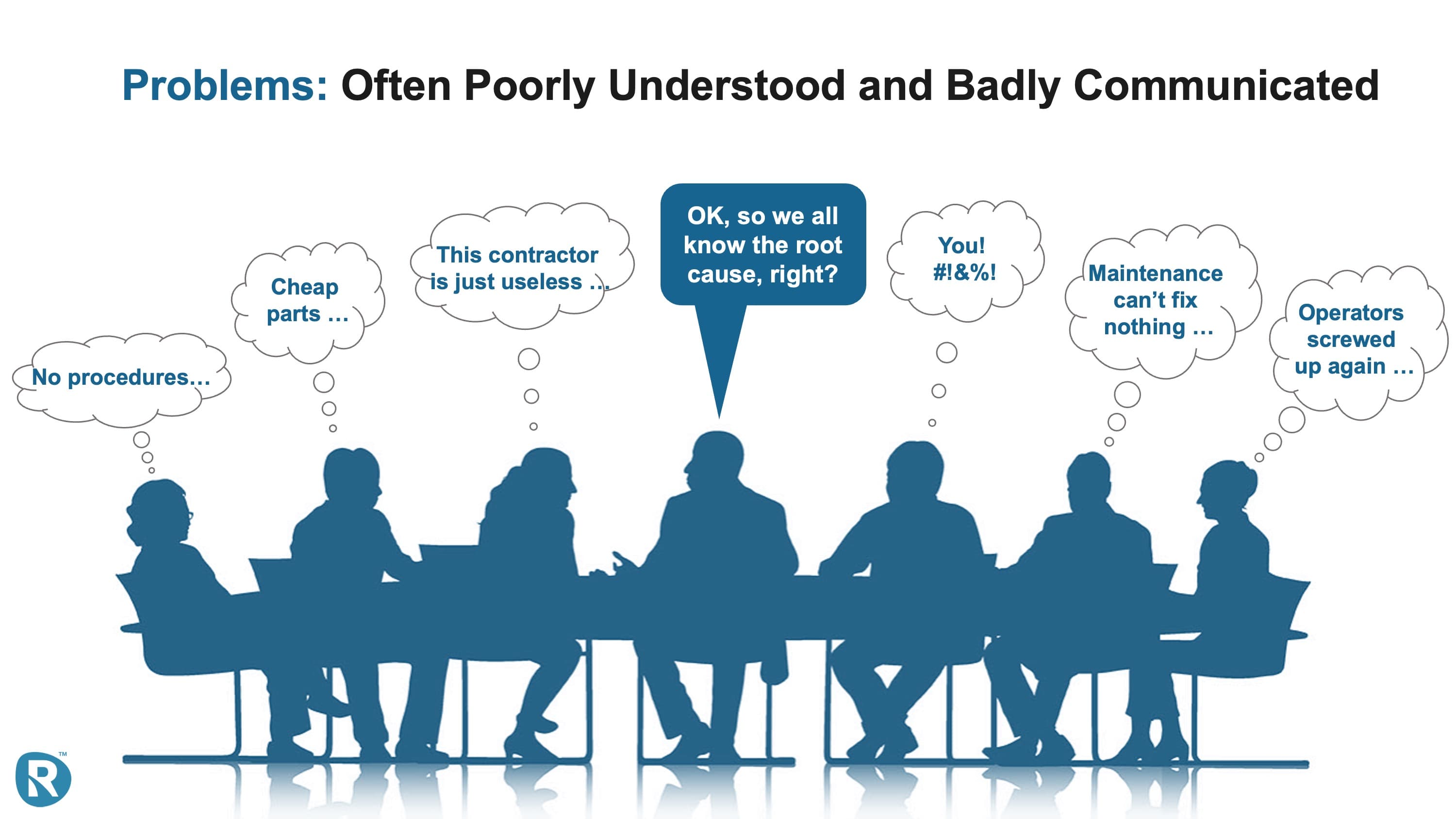
Why human error is inevitable, why it is a consequence rather than a root cause, and how you reduce it by changing the conditions people work under instead of blaming individuals — including the common preconditions that make mistakes more likely.

Fact-based problem solving

Fact-Based Problem Solving

How to run an RCA as an evidence-backed investigation — writing clear problem statements, avoiding the mind traps that derail analysis, and preserving and collecting evidence so your conclusions rest on facts rather than opinion.

Why components fail

Why Components Fail

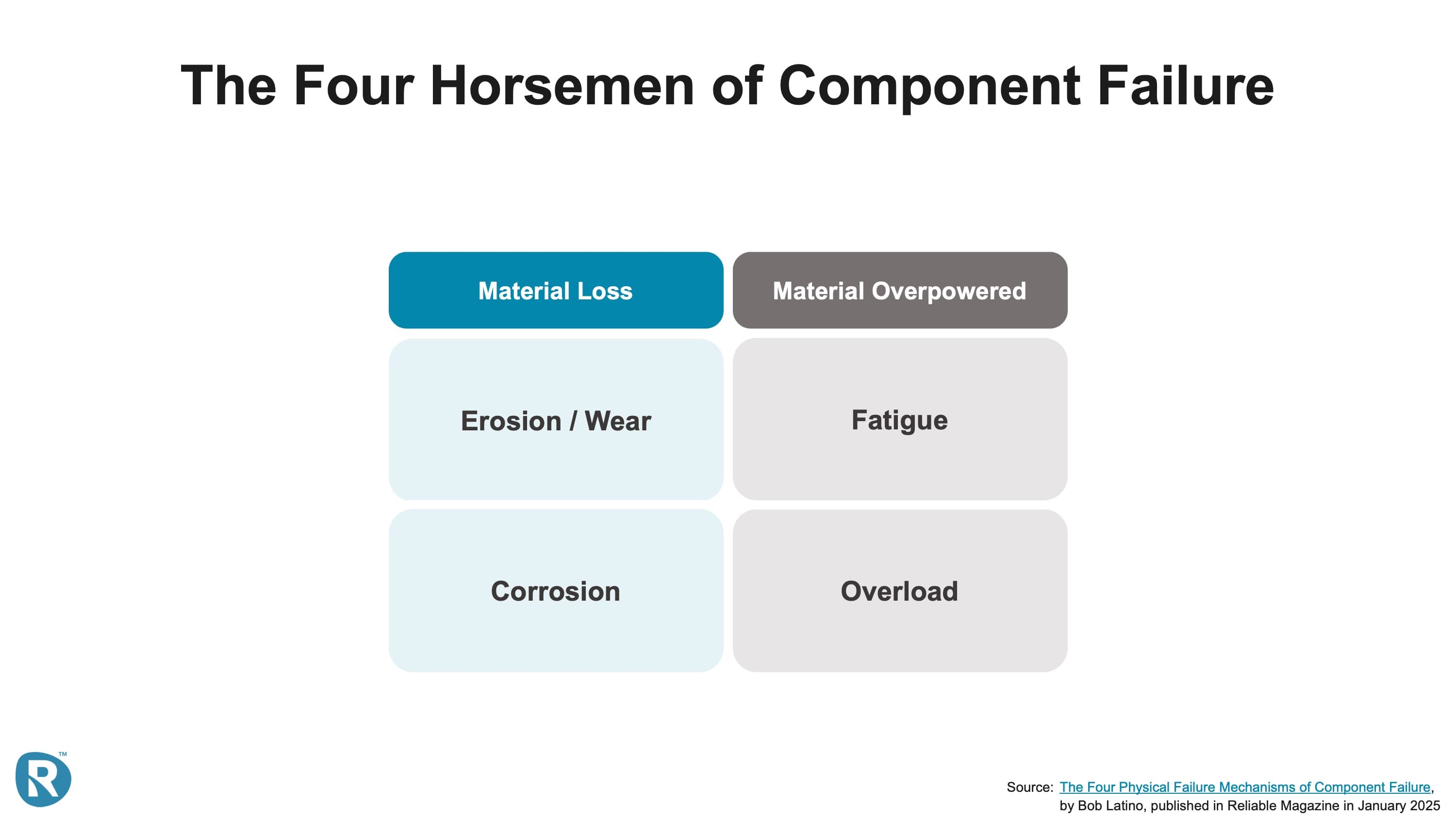
What good component life looks like and the physics behind how parts actually fail — erosion and wear, corrosion, fatigue and overload — and how physical defects, human error and organisational weaknesses combine to cut equipment life short.

The end-to-end defect elimination and RCA process

The End-to-End DE & RCA Process

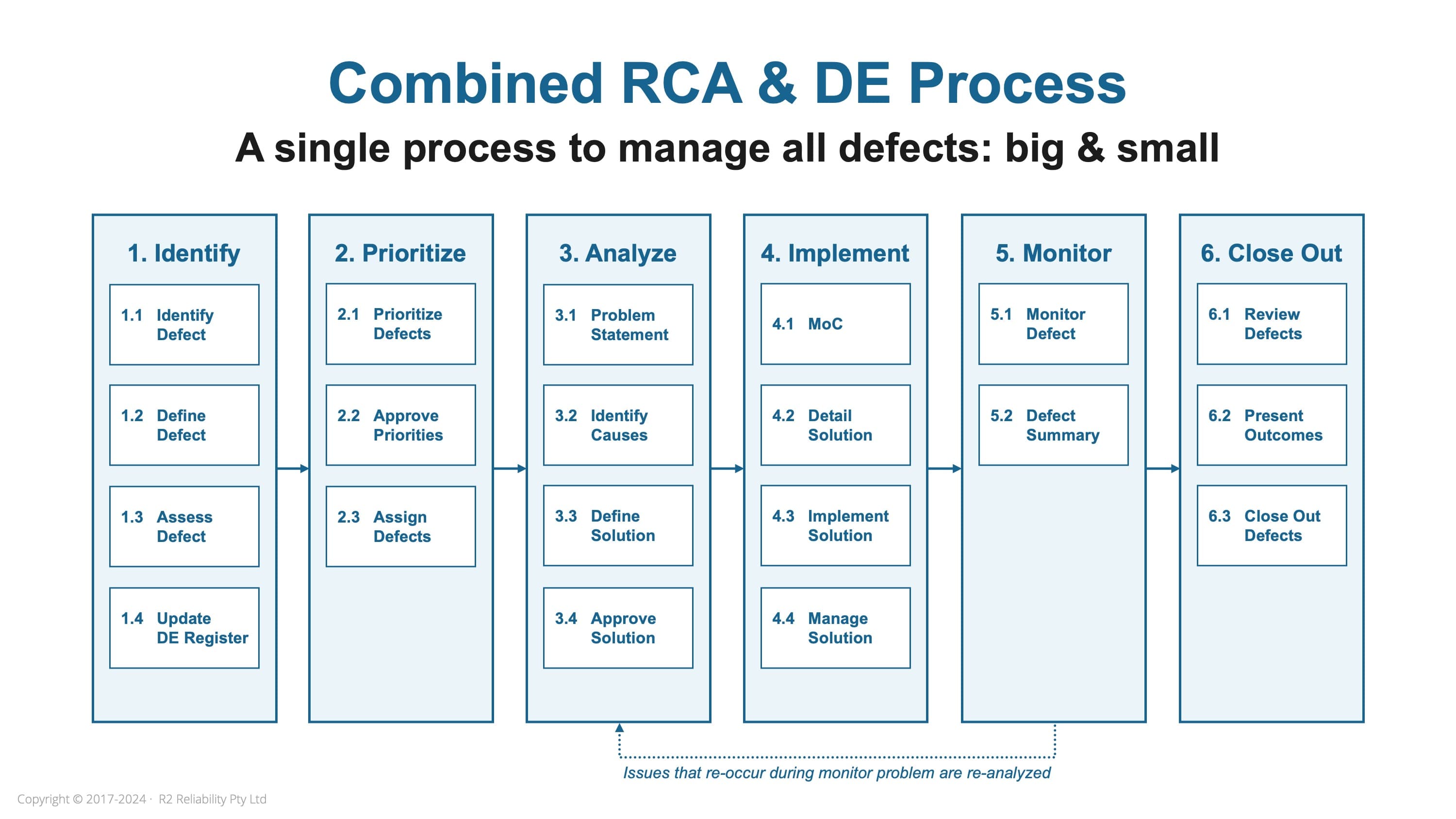
A single, repeatable process that runs from Identify and Prioritise through Analyse, Implement and Monitor to Close Out — scaling from an individual root cause analysis up to defect elimination across a whole site.

Implementing defect elimination in your organisation

Implementing DE in Your Organisation

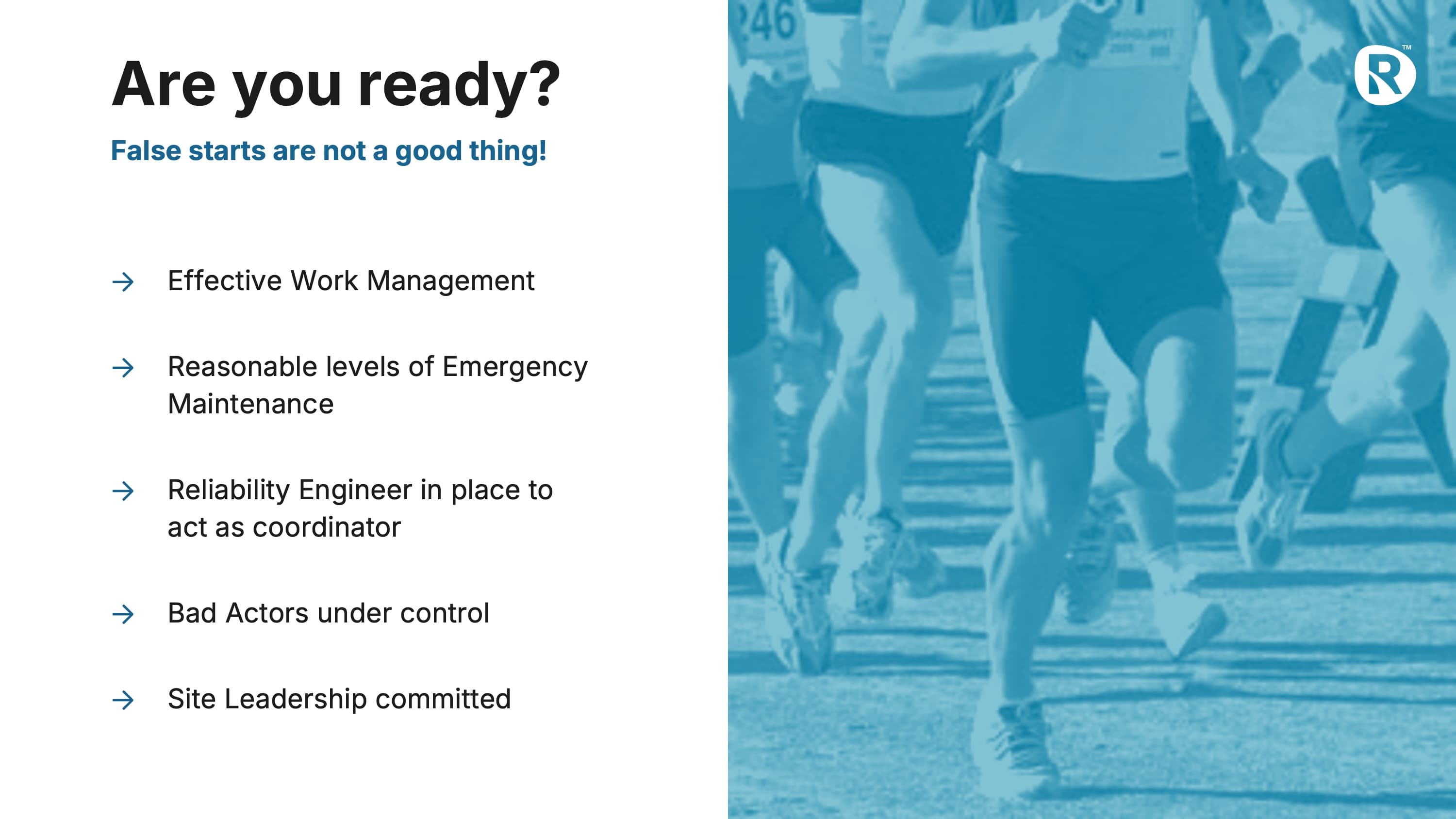
What it takes to make DE and RCA stick: committed leadership, a documented process and a trained coordinator, a deliberately simple tracking system, and the facility readiness — from working planning & scheduling to a stable working environment — that has to be in place first.

The full curriculum, pricing, and launch date will be announced ahead of the public release. Subscribe to the launch list to get the announcement first and qualify for early-cohort pricing.

Curriculum

Course structure (draft)

These modules reflect the current draft course outline and may change before launch. They’re shown to give you a feel for the scope of DE100, not as a final commitment.

01

Module 1 — Introduction

Coming soon

We start with why defect elimination and RCA matter. We look at the real cost of repeat failures and how most organisations end up living with them, why moving from reactive to proactive work depends on effective root cause analysis, and why defect elimination is what sets world-class plants apart. You’ll also see how DE builds a reliability culture by engaging a large part of the organisation, not just a specialist few.

02

Module 2 — Defect Elimination

Coming soon

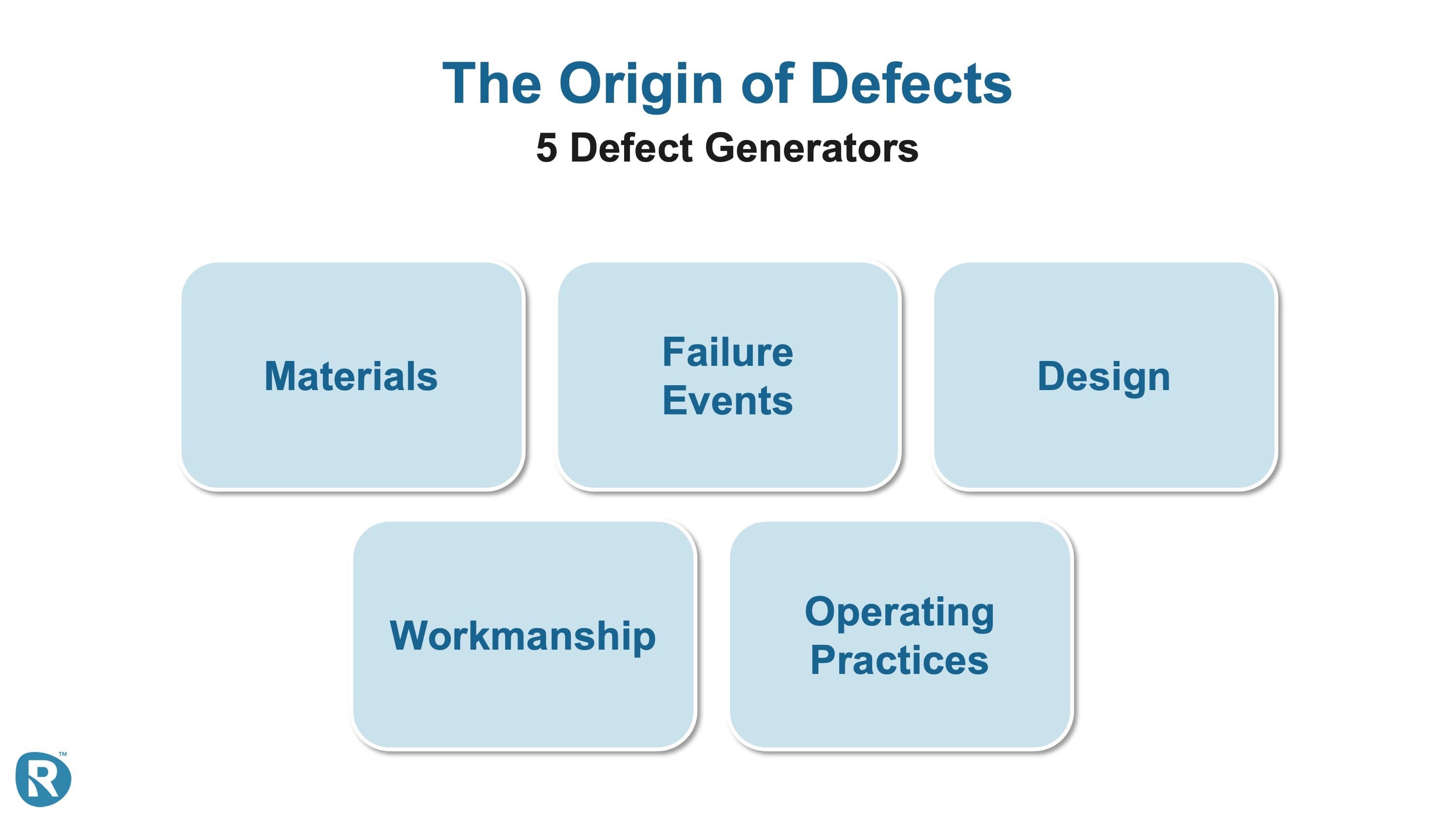
This module draws the line between defect elimination and root cause analysis, and shows how they fit together — using RCA to tackle your bad actors first, then progressively eliminating the minor defects most organisations ignore. We cover where defects come from, why so many RCAs fail (shallow analysis, chasing a single “root cause”, and stopping before anything is implemented), and the 7 Rules of an effective DE process. You’ll also look at the hierarchy of controls, a fit-for-purpose “MoC-Lite” approach to change, and why a learning culture rather than a blame culture is what makes DE stick.

03

Module 3 — Human Error

Coming soon

Human error is inevitable — even skilled, experienced people make mistakes, and the best people can make the worst ones. This module reframes “human error” as the start of an investigation rather than its conclusion: errors are consequences of the conditions people work under, not root causes in themselves. We look at the common preconditions that make errors more likely — the “Dirty Dozen” of fatigue, time pressure, poor communication and the rest — and at how you manage error by improving work conditions instead of blaming individuals. It closes with the idea of a Just Culture for handling deliberate rule violations.

04

Module 4 — Fact Based Problem Solving

Coming soon

Good RCA is an investigation backed by evidence, not opinion. This module covers how to write effective problem statements, how far an analysis needs to go, and the mind traps — confirmation bias, complexity bias, the engineer’s shortcut — that lead teams to the wrong answer. We spend time on preserving and collecting evidence like a crime scene, using a simple Parts, Position, People, Paper checklist so nothing is overlooked, and on interviewing people in a way that gets accurate accounts rather than leading them.

05

Module 5 — Failure Modes & Characteristics

Coming soon

Components should last far longer than they often do — bearing life is measured in years, not hours, when load, alignment and contamination are under control. This module sets out what “good” looks like for common components and then works through the physics of how they actually fail: erosion and wear, corrosion, fatigue and overload. Underneath those failure modes we trace the chain the ABCs of defect elimination describe — physical defects caused by human errors, which are in turn caused by weaknesses in organisational systems.

06

Module 6 — The Defect Elimination & RCA Process

Coming soon

Here everything comes together into one repeatable process that works for a single RCA and scales up to run defect elimination across a site. We walk the process end to end — Identify, Prioritise, Analyse, Implement, Monitor and Close Out — including how to build and maintain a defect register, prioritise your top bad actors, and take a solution all the way through to verified close-out. We also weigh up when a site-based approach works better than a centralised one.

07

Module 7 — Analysis Techniques

Coming soon

No single technique fits every problem, so this module helps you pick the right tool for the job. We look at ways to lay out and present evidence — timelines, control charts, fault and logic trees — and then work through the main RCA methodologies: 5-Why, Fishbone (Ishikawa), Apollo RCA, Tripod Beta and Kepner-Tregoe. We also cover structured problem-solving formats like A3 and 8D.

08

Module 8 — Implementing RCA & DE in an Organisation

Coming soon

A good process still fails without the right conditions around it. This module covers what it takes to stand up DE and RCA for real — committed leadership providing funding, resourcing and a long-term view, a documented process and a trained DE Coordinator in place, and a tracking system you deliberately keep simple to start. We look at running a pilot before a wider roll-out, and the facility readiness that has to exist first: working planning & scheduling, a reasonably stable environment, and a reliability engineer able to act as coordinator.

09

Module 9 — Defect Elimination & RCA Case Studies

Coming soon

The course closes with real-world defect elimination and RCA case studies that put the whole process into context.

Included

What will be included

  • Full self-paced video course (final length to be announced)
  • Downloadable slides, transcripts, and audio for every lesson
  • Templates and worksheets for the Defect Elimination process and supporting RCAs
  • Certificate of completion (PDF)
  • SMRP recertification credits
  • Lifetime access to course updates
  • Bi-weekly live Q&A with Erik for as long as you’re enrolled
Erik Hupjé

Meet your teacher

Erik Hupjé

My passion is for continuous improvement and keeping things simple. Through the Reliability Academy, I help Maintenance & Reliability professionals around the globe – people like yourself – improve their plant’s reliability and their organisation’s bottom line.

I am a Certified Maintenance & Reliability Practitioner (CMRP), Certified Reliability Leader (CRL), Certified Asset Management Assessor (CAMA) and a Chartered Professional Engineer (CPEng).

But those are just credentials, it is my industry experience and practical approach to the topics I teach that our students and clients appreciate the most.

Coming soon

DE100 launches soon

Add yourself to the launch list to be the first to hear when the course goes live, see the final curriculum, and qualify for early-cohort pricing.

FAQs

DE100 FAQs

A specific launch date hasn’t been announced. The course is in development and we will email everyone on the launch list before it goes public. Add your email to the launch list above to be the first to know.

Yes — we plan to offer the first cohort a launch-pricing discount. The discount and any cohort caps will be detailed in the launch announcement.

No. PS100 covers Planning & Scheduling, PM100 covers Preventive Maintenance, and DE100 will cover Defect Elimination. These are three of the four pillars of the Road to Reliability™ framework — each course teaches the discipline that goes with one pillar.

Yes. While the self-paced course is in development, our coaching program — the Defect Elimination Sprint — is available now and works with your team to implement the process end-to-end. Book a call if you want to discuss whether a coaching sprint fits your situation.

The SMRP discontinued their Approved Education Provider program in 2020 so we can’t market new courses as accredited. We design the content to the same standards we held during accreditation. The course can be used for credit hours towards ongoing professional development and maintaining CMRP status.