
Reliability Academy

Online maintenance planner training

PS100: Implementing Maintenance Planning & Scheduling

Learn what maintenance planning & scheduling is, how it creates value in an industrial environment, and how to successfully implement it in your organisation.

Our Maintenance Planning & Scheduling Courses are also available in:

TurkishFrenchSpanishPortuguese

PS100 course overview

Maintenance planning and scheduling training, fully online

PS100 is a fully online, self-paced maintenance planning and scheduling course for maintenance planners, schedulers, supervisors and implementation leaders. Across 10 modules and 48 lessons, you will learn the complete planning and scheduling process and how to implement it using practical tools, assignments and personal feedback.

What you will learn

Course objectives

The PS100 Implementing Maintenance Planning & Scheduling training course provides you not only with the knowledge and understanding of how effective maintenance planning & scheduling should work in an industrial environment, but also how to implement it.

Throughout this fully online maintenance planner training course, you will learn best practices and how effective maintenance planning & scheduling will add value to your business. We will also teach you how to implement planning & scheduling using a proven framework that combines both project management and change management principles. Implementing Maintenance Planning & Scheduling will improve your maintenance productivity and is often the first step you need to take on the Road to Reliability™.

To succeed with that higher objective this training course teaches you:

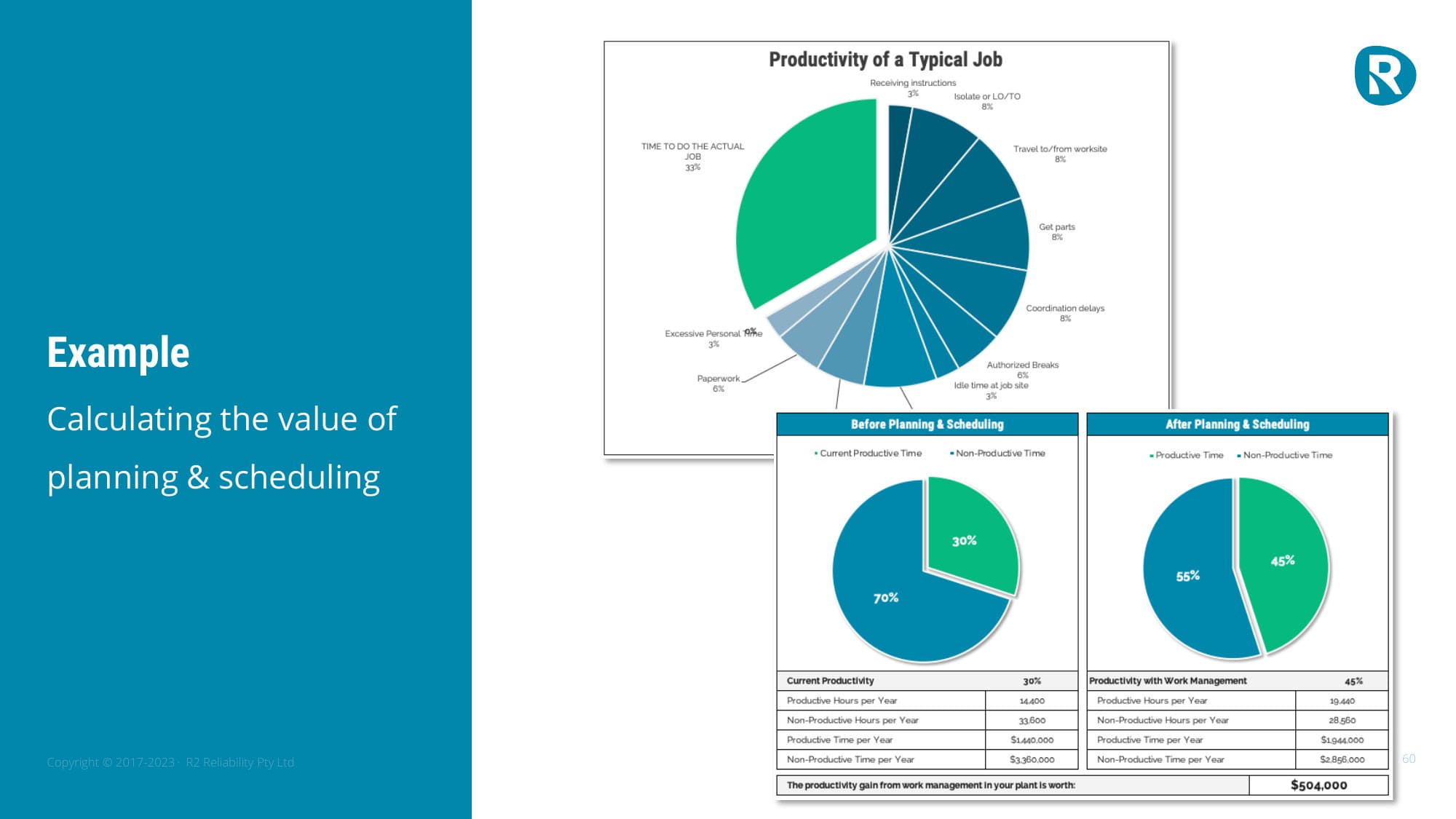
Calculating the value of planning and scheduling

How to Build a Business Case for Planning & Scheduling

You will learn how to build a business case for implementing or improving planning & scheduling in your business and how to sell this to your leadership. This includes how to estimate the value planning & scheduling can bring to your organisation, which we’ll do using the Wrench Time Calculator.
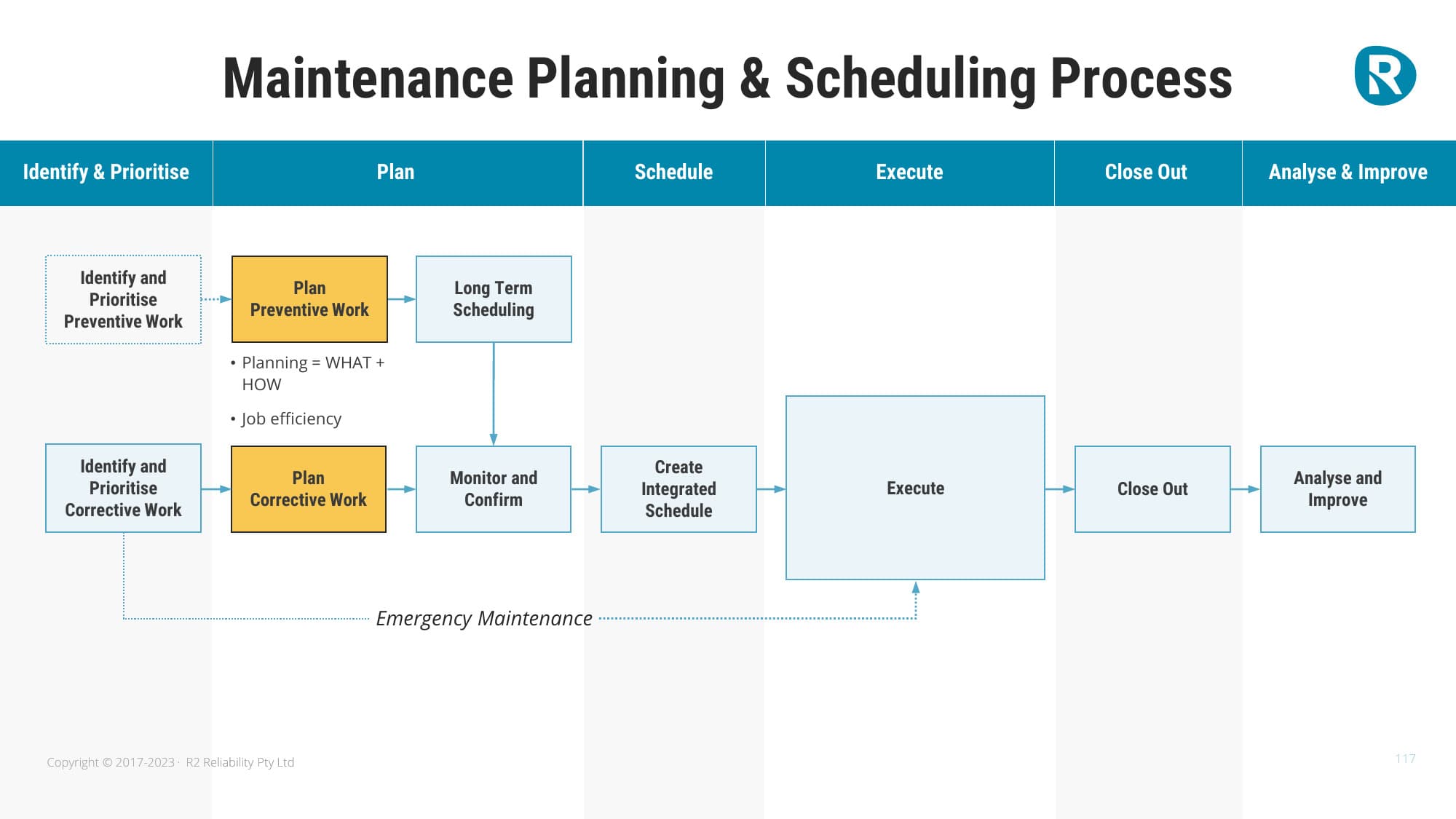
The maintenance planning and scheduling process

The Planning & Scheduling Process

You will learn the key elements and best practices in the maintenance planning & scheduling business process and how they interact with each other. This includes developing a planning & scheduling business process flow specific for your organization.

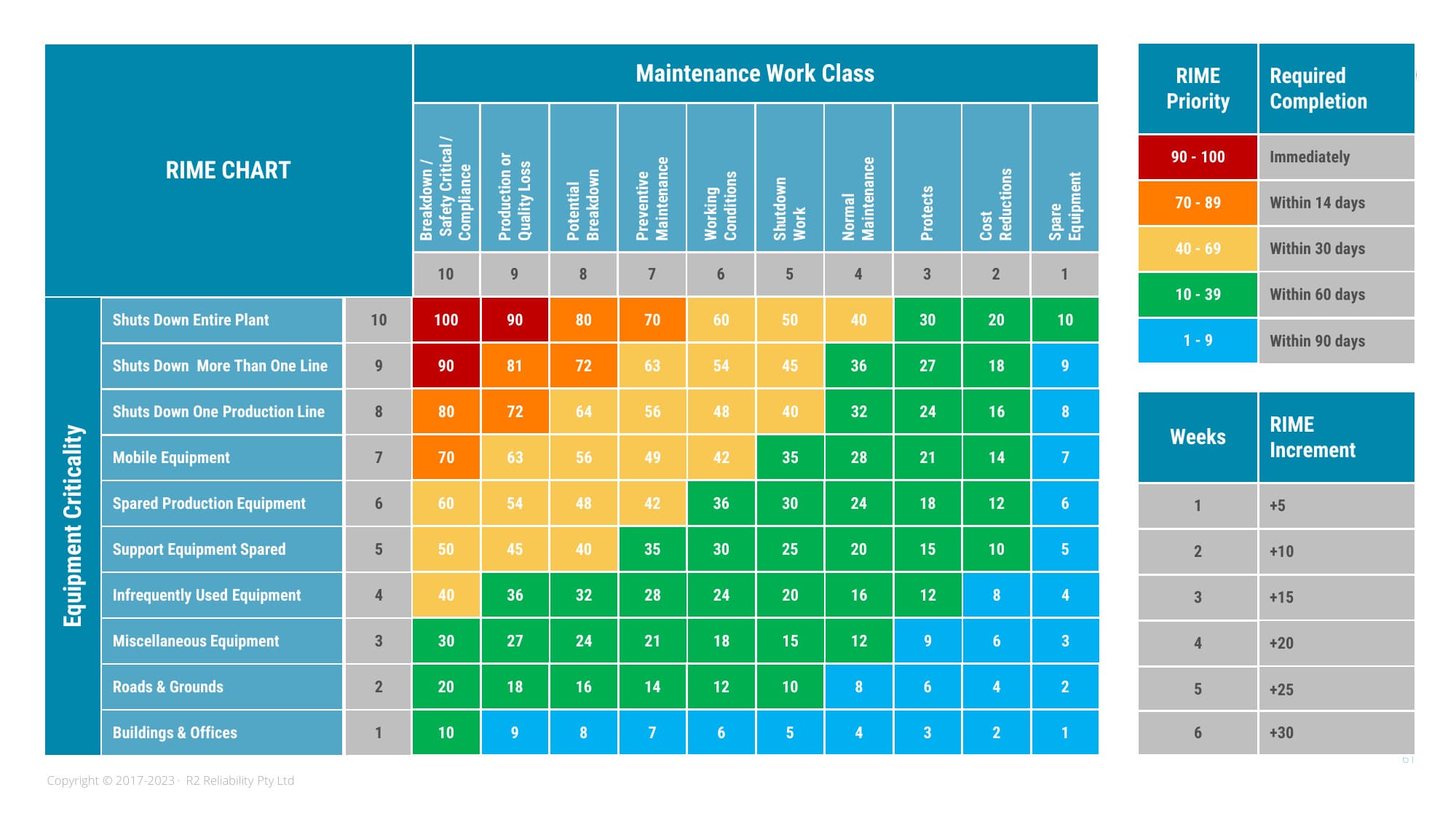
RIME chart for corrective maintenance prioritisation

The Importance of Prioritisation

You will learn the importance of work prioritisation and different, more objective methodologies including the RIME (Ranking Index for Maintenance Expense) priority system and using a RAM (Risk Assessment Matrix).

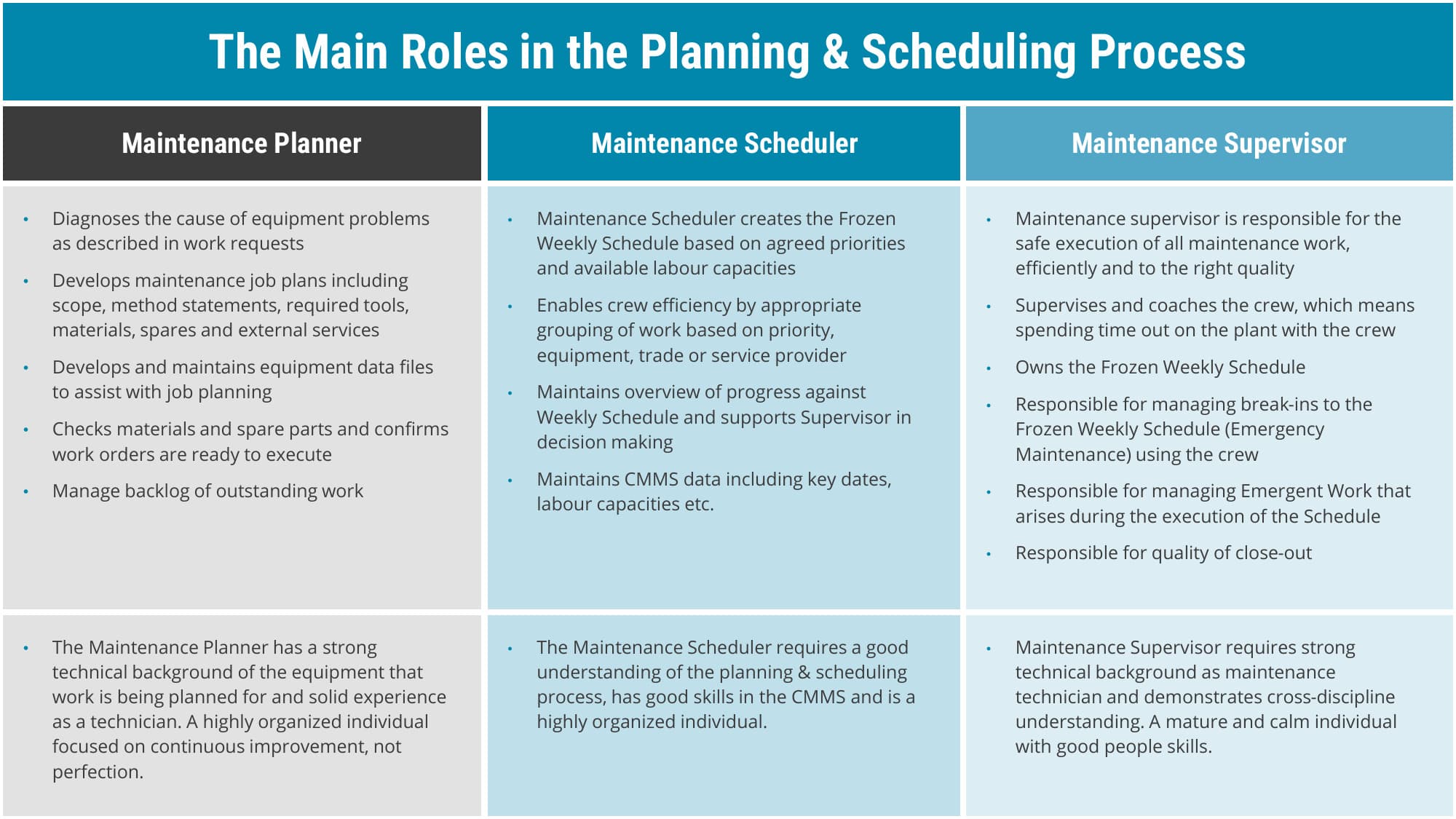
Main roles in the planning and scheduling process

The Key Roles in The Planning & Scheduling Process

You will learn the key roles in the maintenance planning process particularly the roles of the maintenance planners, the schedulers and the maintenance supervisors. You will understand how each role contributes differently to an effective and efficient maintenance process.

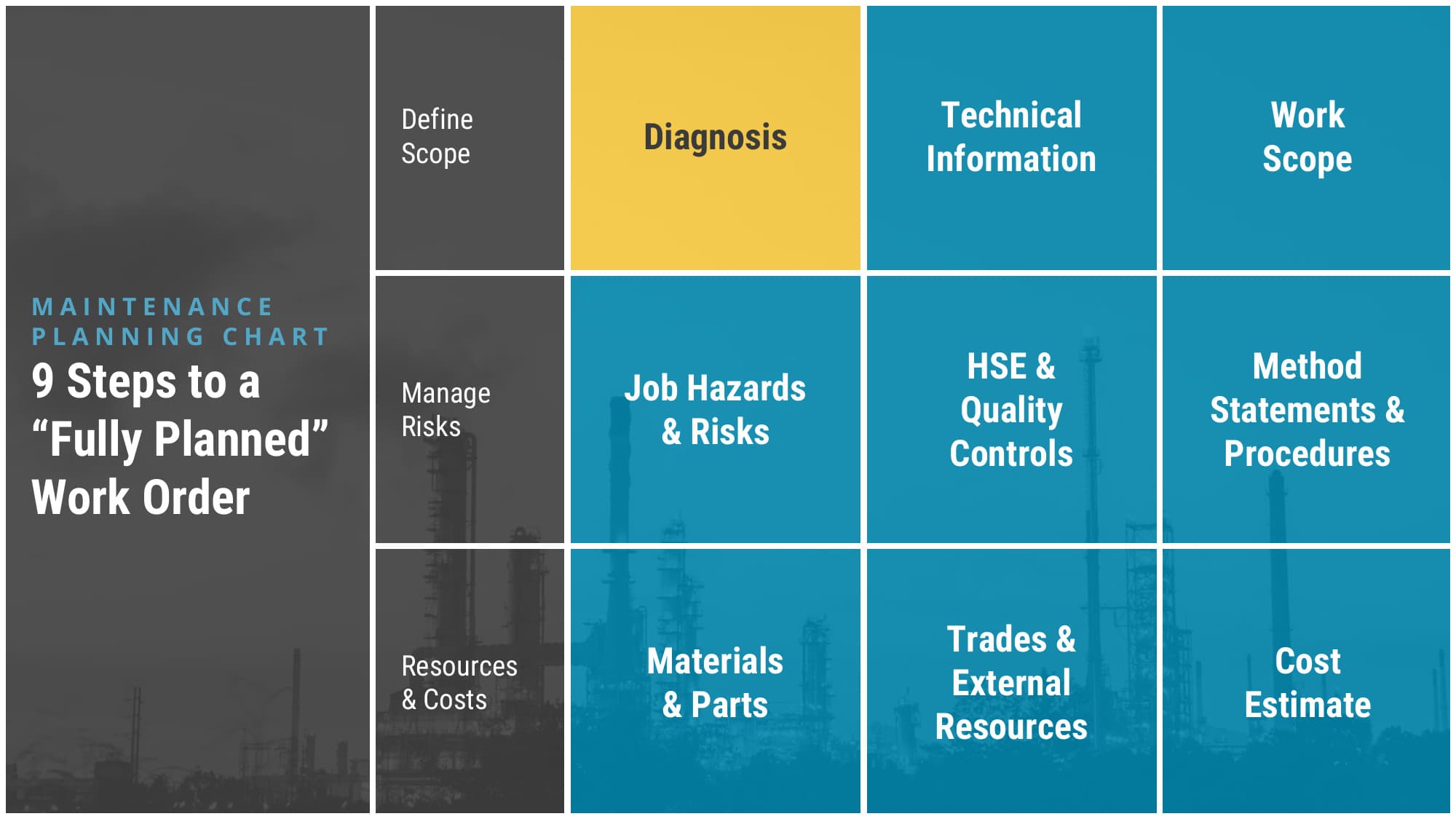
9-step maintenance planning chart for a fully planned work order

How to Plan Maintenance Work

You will learn how to plan maintenance tasks and understand the reason for the maintenance planning principles. You will be able to clearly explain the difference between planning & scheduling to others and can understand how to plan maintenance work using approaches like the 5M Maintenance Planning Model.

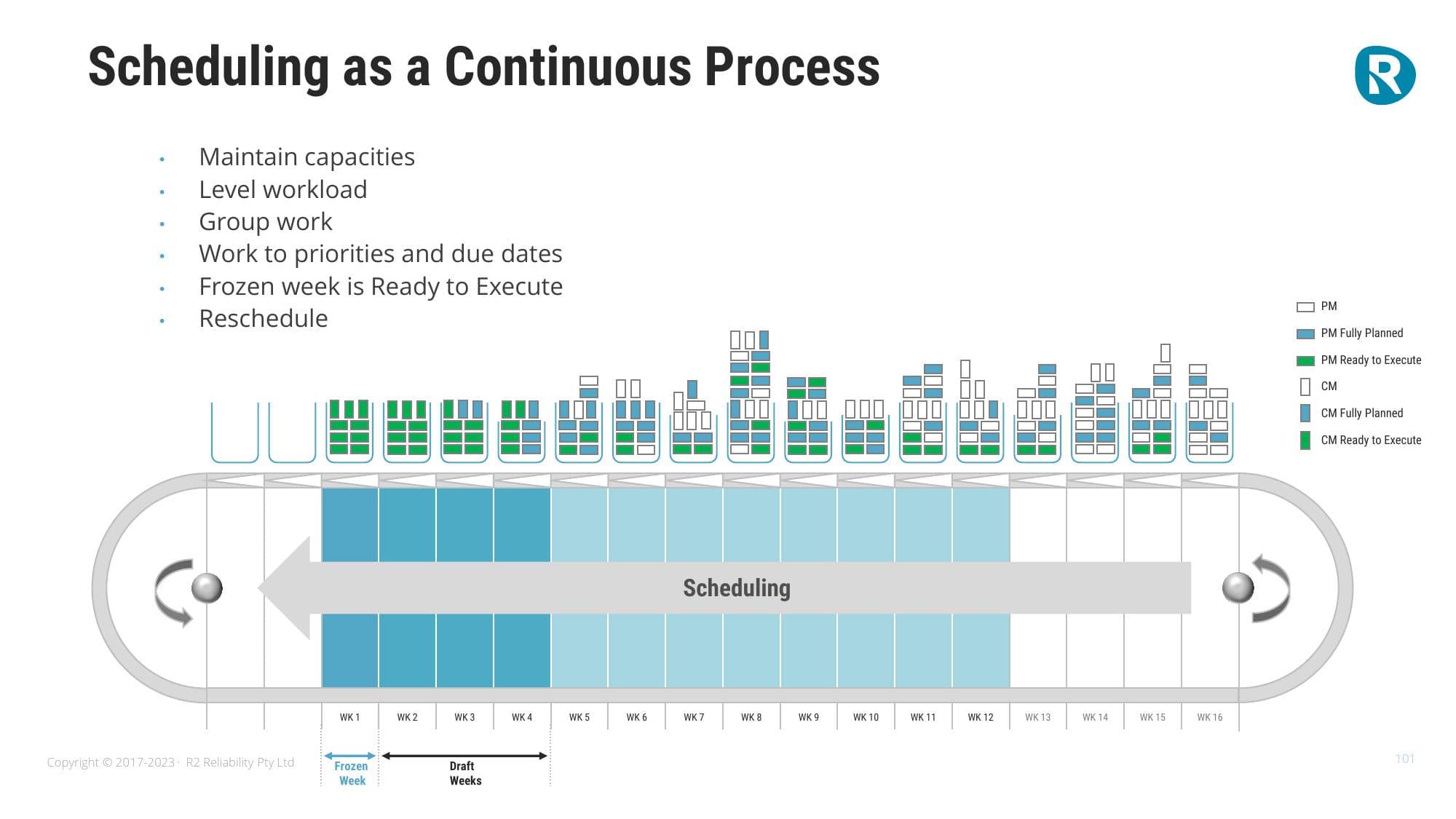
Scheduling as a continuous process

How to Create & Manage a Frozen Weekly Schedule

You will learn the best practices on how to create and manage a Frozen Weekly Maintenance Schedule using the Scheduling Principles. And you will also learn to see scheduling as a continuous process, very similar to a conveyor belt. We will also talk about capacity planning to match your workload with your available resources.

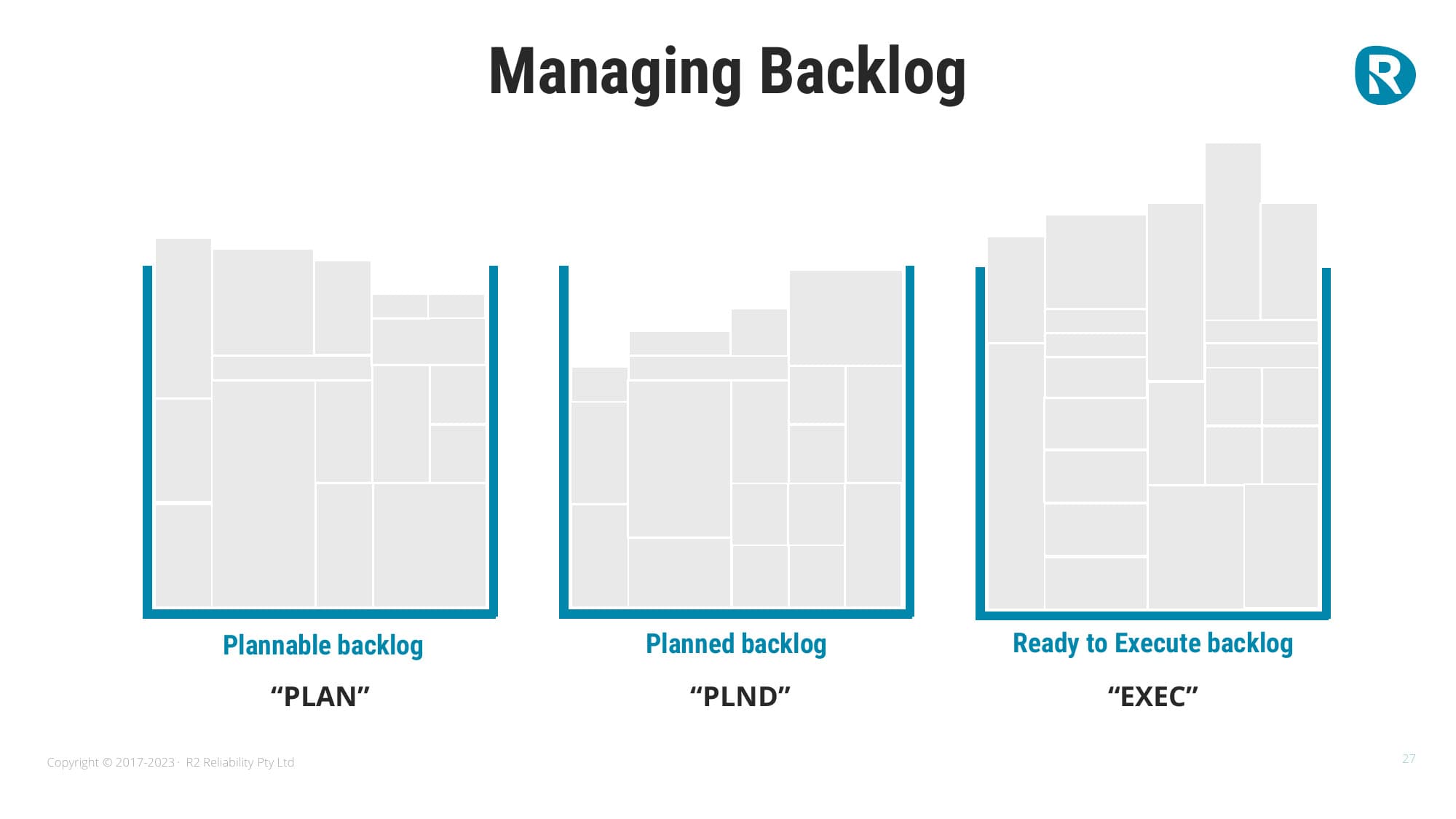
Managing maintenance backlog

How to Effectively Manage Your Backlog

You will learn best practices on how to effectively manage your maintenance backlog, including what categories of backlog you should use, how much backlog you should have and how to monitor your backlog. We’ll introduce the key backlog categories: Plannable, Planned, and Ready-to-Execute (also called Executable).

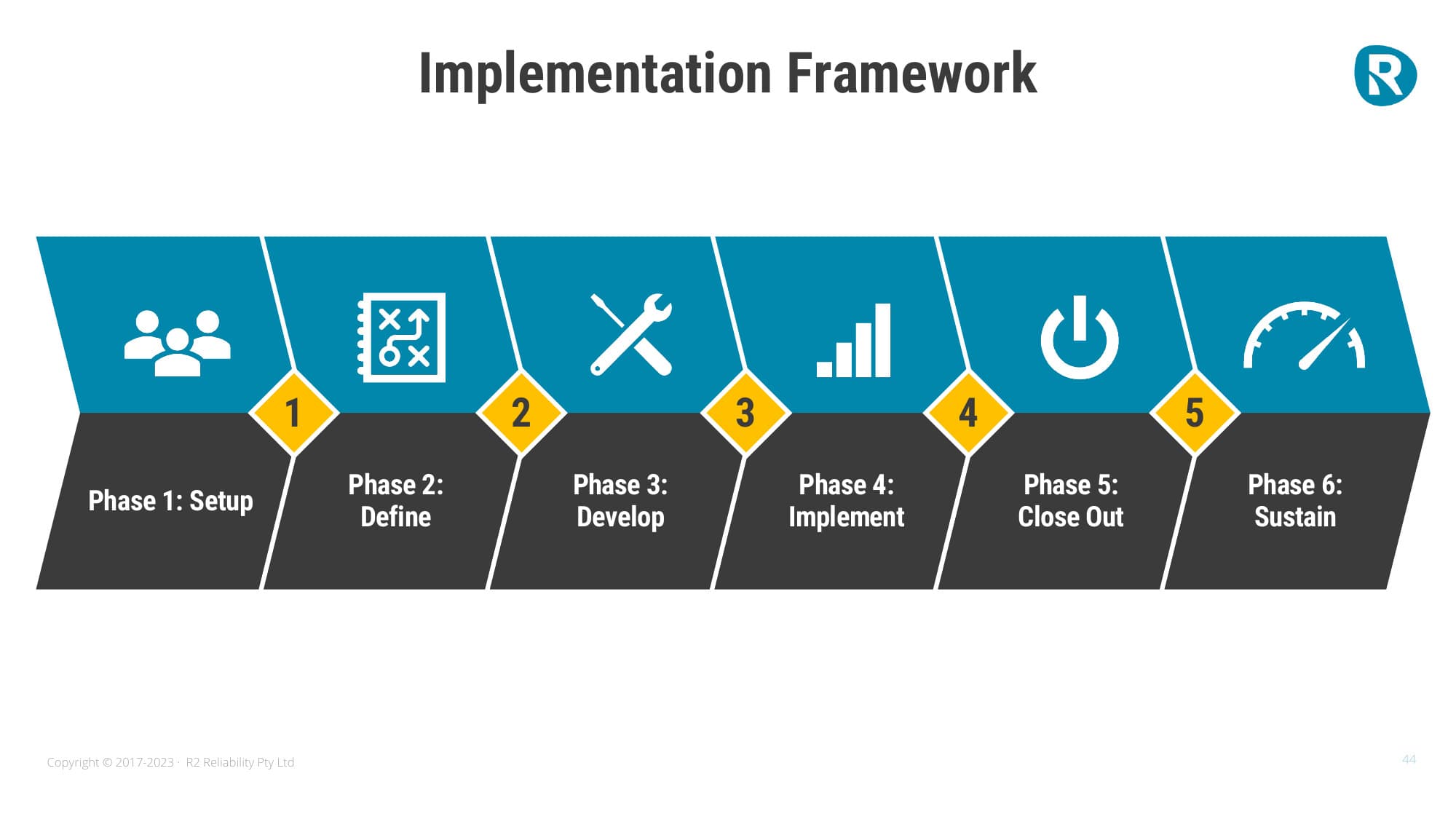
Implementation framework — 6 phases

How to Implement Maintenance Planning & Scheduling

And in Module 10 you will learn how to implement Maintenance Planning & Scheduling in your organisation successfully using our proven implementation framework. You will learn how to apply the required project management and change management principles to ensure lasting results.

And much more… from practising best practices, setting quality standards for new work requests, to the most important planning & scheduling key performance indicators (KPIs) and how to calculate them, to how to deal with emergent work during the execution phase, and how to get on top of the large amount of emergency work that most reactive maintenance organisations struggle with.

Learn more about our Maintenance Planner Training Courses

Download our Course Brochure for the full breakdown of modules, lessons, and what you will be able to do by the end of the course.

Curriculum

Course structure

To achieve these objectives the course has been broken down into 10 modules, each module consisting of individual lessons. In total there are 48 lessons and 14 hours of pre-recorded videos.

01

Module 1 — Welcome to the Course

A short module, but very important module. In this module, we’ll get you setup for success. We’ll cover course objectives, go into the details of exactly what you’ll learn, and how we will work together. In addition, I’ll give an introduction to the online learning management system. And introduce you to our support staff and where and how to ask for help.

02

Module 2 — Introduction to Planning & Scheduling

In this module, we start the real work. After a brief exploration of the role of maintenance in asset-intensive industries, we’ll explore why we need planning & scheduling. We’ll discuss the roles of maintenance planners, schedulers, and supervisors. We’ll cover the increase in productivity and what that means for the bottom line of the business you work for. But we’ll also explore other key benefits of planning & scheduling that are maybe less tangible like workforce motivation and safety.

03

Module 3 — Identify & Prioritise Work

Module 3 is all about the best practices for how to identify and prioritise work. Fail to get this right and you’ll continue to chase your tail and will not get out of the reactive maintenance model. Most organisations don’t realise how critical this step is. Most managers and supervisors don’t want to spend the time getting this right. In this module, I will explain why you don’t want to be making that mistake and why putting a lot of effort into creating quality work requests and prioritising them properly is so critical to your success. And in the last lesson, we’ll touch on some key performance indicators (KPIs) that you can use to measure your success.

04

Module 4 — Plan Work

Module 4 is all about maintenance planning, why it is important and the 6 Maintenance Planning Principles that underpin a sound maintenance planning process. We’ll talk quite a lot about best practices, roles, and responsibilities because this is where many organisations go wrong. They burden their maintenance planners with work that should be done by others and in doing so they never reach the productivity improvement they were aiming for. We’ll also discuss the level of detail that is required in a maintenance work order, what makes a good ‘work pack’ and we’ll touch on common mistakes and some useful KPIs.

05

Module 5 — Monitor Work

This is a step in the planning & scheduling process that is not often talked about, but it’s key to your success. Once the work is planned, all materials are ordered, and purchase orders have gone out for external services you need to keep an eye out on when vendors are available, when materials will arrive at site etc. And when that’s all in place, you need to flag the planned work in your CMMS as ‘Ready for Execution’ as a handover point to the Scheduler.

06

Module 6 — Schedule Work

Module 6 is all about scheduling and your weekly maintenance schedule. We’ll talk about how scheduling is different from planning and why you need both. We’ll discuss 6 basic scheduling principles including why you need to schedule for a Frozen Week. how to build up your Weekly Schedule. And we’ll delve into capacity planning plus we’ll talk about some basic scheduling techniques and concepts. As usual, our last lesson in this module will cover KPIs in this case those KPIs that you can use to drive your scheduling process, for example, Weekly Schedule Compliance.

07

Module 7 — Execute Work

Module 7 is all about executing the maintenance work that has been planned and scheduled. This is the core of the process and a lot of what we do in planning & scheduling is to drive efficiency in this part of the process. We’ll focus extensively on the role of the maintenance supervisor. We’ll discuss in detail how you need to manage Emergency Work. And we’ll touch on how you should be dealing with Emergent Work, the work you discover whilst doing a job.

08

Module 8 — Close Out Work

Module 8 covers the close out of work. This is where we capture everything that went well and the things that didn’t go too well. We provide feedback to the planner in terms of planning quality, materials etc. and we capture technical history in the CMMS so the reliability engineers can use that information in their continuous improvement programs. We’ll also discuss how this links into your Defect Elimination and Root Cause Analysis processes. The secret to successful planning & scheduling is a continuous improvement loop and that relies on the proper close-out of work and high-quality feedback.

09

Module 9 — Review & Improve

Module 9 is all about making things better and better or in other words: Continuous improvement and how to build that into your business and your work processes. We’ll delve into using KPIs to drive performance and the limits to what KPIs can do for you. We’ll talk about the need to have a ‘process owner’ who conducts annual process ‘audits’ and the value of GEMBA walks. In Lesson 4 of this module, we’ll touch on a contentious subject – measuring wrench time. How to do it, when to do it and when not.

10

Module 10 — Implement Maintenance Planning & Scheduling

Module 10 is where this course is completely different from all the other planning & scheduling courses out there. In this module, we will give you a tried and tested process to implement planning & scheduling in your organisation. We’ll cover the business case, change management basics, setting up your project team for success, the need for coaching and each lesson comes complete with practical tools and techniques that are proven to work when it comes to implementing planning & scheduling in a real business environment.

Included

What’s included

  • 10 Course Modules
  • 48 lessons with 14 hours of video content
  • Course slides (PDF), Transcript (PDF) and Audio of all lessons (MP3)
  • Certificate of completion (PDF)
  • Professional-development hours that can be used towards maintaining CMRP status
  • Lifetime Access
  • Access to Module 10 — Implementing Planning & Scheduling
  • All templates required to document the Planning & Scheduling process
  • Complete set of change management & implementation tools
Erik Hupjé

Meet your teacher

Erik Hupjé

My passion is for continuous improvement and keeping things simple. Through the Reliability Academy, I help Maintenance & Reliability professionals around the globe – people like yourself – improve their plant’s reliability and their organisation’s bottom line.

I am a Certified Maintenance & Reliability Practitioner (CMRP), Certified Reliability Leader (CRL), Certified Asset Management Assessor (CAMA) and a Chartered Professional Engineer (CPEng).

But those are just credentials, it is my industry experience and practical approach to the topics I teach that our students and clients appreciate the most.

Ideal participants

Who PS100 is for

PS100 is designed for maintenance and reliability professionals who need to understand the complete planning and scheduling process and help make it work in their organisation.

Maintenance plannersMaintenance schedulersMaintenance supervisors and coordinatorsMaintenance and reliability engineersMaintenance managersPlanning and scheduling implementation leads

Choose PS100 when you are expected not only to perform planning and scheduling work, but also to build, improve or lead the process in your organisation.

Choose the right course

PS100 or PS200: which course should you choose?

Both courses are fully online and teach the core maintenance planning and scheduling process. PS100 adds the implementation framework, tools and change-management guidance.

PS100This course

Implementing Maintenance Planning & Scheduling

Choose PS100 when you need practitioner knowledge and the resources to implement or improve the process across your organisation.

  • Includes all 10 modules and 48 lessons
  • Includes the implementation module, framework, tools and templates
  • Best for implementation leads, project teams and process owners
PS200

Maintenance Planning & Scheduling

Choose PS200 when you need the core practitioner skills but are not responsible for leading the implementation.

  • Includes the same core planning and scheduling curriculum
  • Excludes the implementation module, framework, tools and templates
  • Best for planners, schedulers and supervisors working within an established process
View PS200

Pricing

Payment options

Payment plan

$795/mo

3 payments spread over 3 months

Enrol now

Full payment

$1,995

One time payment. Quick, easy and best value

Enrol now

Enrol your team

Volume discounts for teams: 10% off for 3+ participants, 20% off for 10+, up to 50% for large teams.

Enrol your team

More training

Other Planning & Scheduling Courses

PS200Best value
Planning & Scheduling

PS200: Maintenance Planning & Scheduling

The PS200 course gives you the same understanding of how planning & scheduling should work and how it adds value as our PS100 course, but without the implementation module. It doesn't include the implementation framework, tools and templates.

9 Modules41 Lessons35hCertificate
EN · ES · FR · TR · PT
PS300
Planning & Scheduling

PS300: Maintenance Planning & Scheduling for Managers

The PS300 course is a condensed version of PS100 for maintenance managers. It covers the key planning & scheduling concepts a manager needs to lead an implementation and drive continuous improvement, without doing the planning themselves.

6 Modules16 LessonsCertificate
Coming soonView course
EN
PS400
Planning & Scheduling

PS400: Maintenance Planning & Scheduling for the Frontline

The PS400 course is a condensed version of PS200 for frontline technicians and operators. It strips out the management-framework complexity and focuses on what you need to know to support the process, work safer, and play your part in it.

3 Modules14 Lessons2hCertificate

Free previews

Example course videos

PS100 FREE COURSE VIDEO #1

What is Maintenance Planning & Scheduling

In this lesson, we will delve into the detail what effective maintenance planning and scheduling really is. We look at the basic elements that go into any planning & scheduling process, no matter what industry you’re in. And we discuss in more detail the difference between planning & scheduling.

Watch this video in another language:
ENEnglishESSpanishFRFrenchTRTurkishPTPortuguese

PS100 FREE COURSE VIDEO #2

The Value Of Planning & Scheduling

In this lesson, I talk about the value of effective maintenance planning and scheduling. I’m going to do that by walking through a detailed example in which I’m going to show you how you can increase your workforce by 35% without hiring anyone. Instead, you’re going to get 35% higher output from your existing workforce. And I’ll show you how to put a dollar value on that productivity increase.

Watch this video in another language:
ENEnglishESSpanishFRFrenchTRTurkishPTPortuguese

PS100 FREE COURSE VIDEO #3

Principles of Maintenance Planning

Although this is the fairly long lesson, there is a single objective. It is for you to know and understand the 6 Principles of Maintenance Planning. These principles outline the best practices that your organisation must put in place in order to achieve an effective planning process.

Watch this video in another language:
ENEnglishESSpanishFRFrenchTRTurkishPTPortuguese

PS100 FREE COURSE VIDEO #4

Scheduling as a Continuous Process

In this lesson, we’ll discuss why scheduling is a continuous process and look at scheduling as a process like a conveyor belt with buckets of work that the scheduler needs to fill. Looking at your weekly maintenance schedule like this will help you understand how the continuous development of a frozen weekly maintenance schedule works, and how it combines with developing a draft schedule for future weeks.

Watch this video in another language:
ENEnglishESSpanishFRFrenchTRTurkishPTPortuguese

Proof

What our clients say about us and our work

A breath of fresh air

“His newly created Maintenance and Scheduling course was a breath of fresh air…The content he provides is very comprehensive and easy to understand. One of the most useful chapters is how to implement the program, a topic often missing in many courses and trainings…I highly recommend it to any person or company endeavouring to advance their company’s maintenance efficiency and productivity.”
Martijn HaddersMartijn HaddersManager Global Maintenance & Asset Management at Henkel

Worth every penny

“An excellent course worth every single penny. I wholeheartedly recommend it to all practitioners, beginners and mature maintenance or operations managers alike, as everyone can benefit from it.”
Andrej AndrojnaAndrej AndrojnaQuantum Consulting, Slovenia

A really valuable course

“The videos are really good, and Erik explains everything with a wealth of knowledge.”
Dan StuartDan StuartMaintenance Delivery Lead at Petrofac UK

FAQs

Planning & Scheduling course FAQs

No. PS100 is not currently an accredited course. Reliability Academy was previously an Approved Education Provider accredited by the Society for Maintenance & Reliability Professionals, but the SMRP discontinued that program in 2020. The course can still be used for professional-development hours towards maintaining your CMRP status, and successful students receive a Certificate of Completion.

No, the course is based on modules, and you need to complete them including all homework tasks sequentially. So, once you have completed Module 1 you get access to Module 2, and so forth until you complete all the course modules and then sit for the final, multiple choice exam (online).

Yes, you will have homework to do. This is an intensive course with assignments that you need to complete in your workplace and submit online. Your assignments will be reviewed and you will receive personal feedback either from myself and/or by a specialised coach.

Yes, in addition to the assignments and quizzes that are included in the various modules, there is a final, online, multiple-choice exam that you need to complete and pass to receive your Certificate of Completion.

As soon as you purchase the course, you can start immediately. You have lifetime access to the course, so you can go through the content at your own pace.

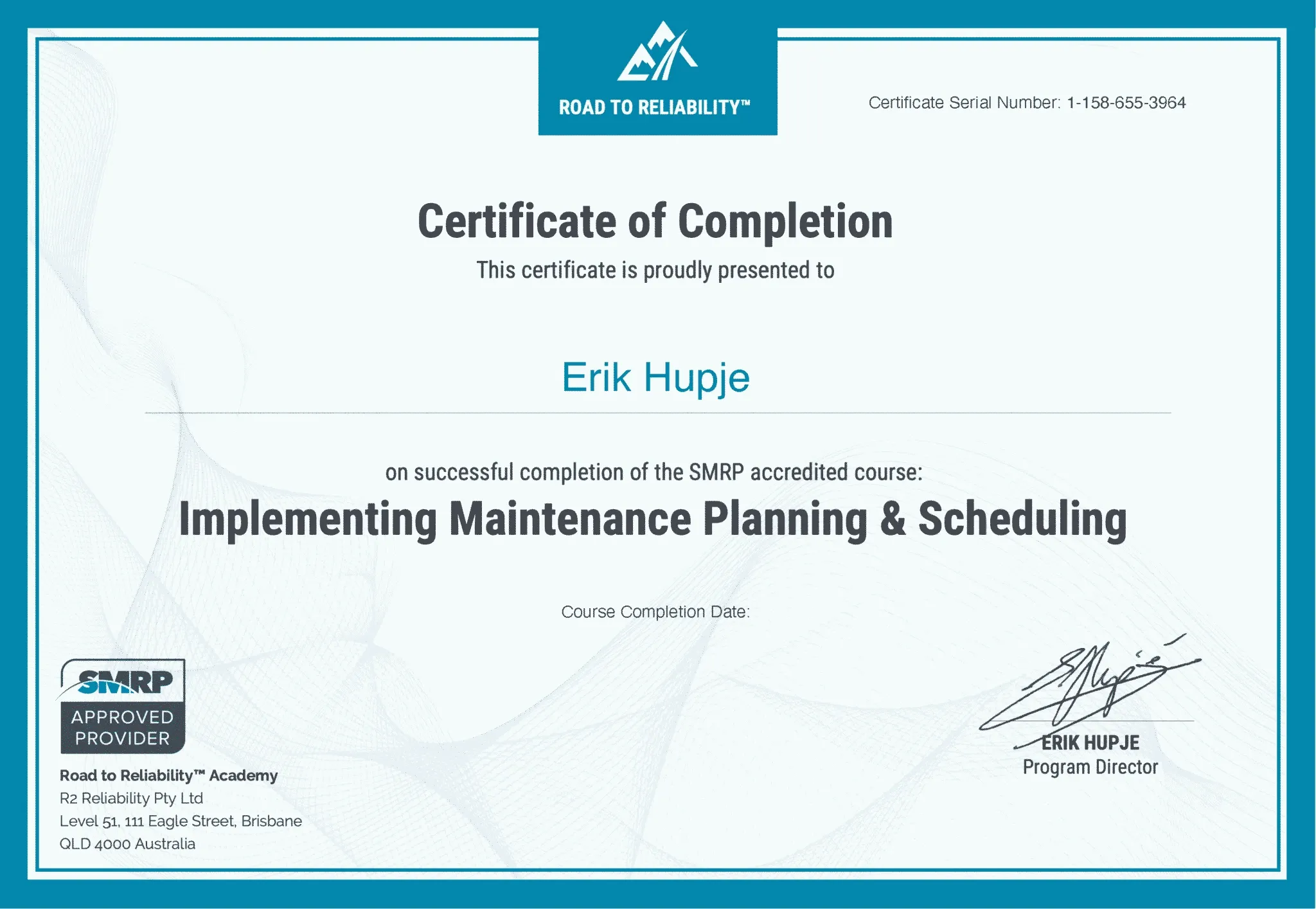
You certainly do. When you have successfully completed all Course Modules, all homework assignments, all quizzes, and you have passed the final (online) exam — you will automatically receive a Certificate of Completion.

Sample PS100 Certificate of Completion

Support is provided in a few ways. First, there is an exclusive forum accessible only to course students to ask questions about the course content. That means you get to discuss topics with fellow students but can also expect answers from myself and/or a specialised coach. Secondly, there are regular ‘office hours’ where you can dial in and ask questions live. If you can’t attend due to time zone differences you can simply email questions in and listen to the replay afterward, which will be stored in the exclusive student-only area. Third, we also offer dedicated coaching programs for the 4 elements of the Road to Reliability Framework. We call these coaching programs Reliability Sprints, where we train and coach your team on implementing the processes we teach. Schedule a call with me if you’re interested. If you or your organisation need more support, simply get in touch. We’re here to help!

All students get lifetime access to the courses they enrol in. That means you can learn at your own pace, anytime, anywhere. 5 to 10 years in the future, you will still have access to these courses, and you can review them as many times as you want.

Absolutely, not a problem. Simply drop me an email at team@reliabilityacademy.com with your full details and the number of people you want to enrol and I can get a quotation off to you.

We’ve had thousands of students love our courses. That’s why we’re confident that you’ll love it too and that you’ll get your money’s worth. But if you’re not satisfied with what you see inside, we’ll give you your money back, no questions asked. With this guarantee, your team can try the course for 30 days, and if you decide that you don’t like the online course, you can simply ask for a refund. As long as: (1) you have completed the first 3 modules — to make sure you have actually given the course a chance; (2) you have not completed the course — to ensure people don’t get free training; (3) you request the refund within 30 days of purchase. Also, if turnover is a big issue for you, we offer you a 24-month turnover guarantee. If someone we have trained leaves your company within 24 months of starting our training, we will train their replacement free of charge.

No! Not at all, the course will be delivered through a web-based Learning Management System, but all you need is a modern web browser like Chrome, Internet Explorer or Safari. You do need a reasonably reliable internet connection, but as the course material is all pre-recorded you can choose when and where you view or listen to the course content. And on what device as you can access the course on a desktop, tablet or smartphone.

Our Planning & Scheduling courses are fully translated into Turkish, Spanish, and French, and the PS100 and PS200 courses are now also available in Portuguese. If you want our courses in your local language, be sure to let me know by scheduling a call with me.

Yes, we have a standard table for volume discounts which are applied when companies purchase the course for multiple students (check our For Teams page). The best option is to schedule a call with me and we can talk through all the options.

Yes, we offer a licensing option, which would give you the right to rebrand the training, modify it so suit your organisation’s practices and then host it in your own Learning Management System. You do not obtain derivative rights or the right to re-sell the course. Schedule a call with me if you want to learn more.

P.S. Getting your Planning & Scheduling in order is really one of the most important steps you can make on the Road to Reliability™. With planning & scheduling you create more stability in your work, increase efficiency and finally make some time for proactive maintenance activities. With this online maintenance planner training course, there is no reason to wait any longer. You can learn the best practices of Maintenance Planning & Scheduling straight from the comfort of your chair and with no need to travel it’s more affordable than ever before.